
Polymer Render
We manufacture Wet & Dry Polymer Render that provide Crack Resistance: The synthetic polymers grant high flexibility, allowing the render to withstand thermal expansion and building settling without cracking.
// Products
Polymer Render
Polymer render is a highly durable, flexible exterior wall coating made by blending traditional cement, sand, and aggregate with advanced synthetic polymers (silicone or acrylic resins). Unlike traditional sand and cement renders that are prone to cracking, the addition of polymers allows the material to flex with the natural movement of a building while providing superior water resistance.
Key Benefits
Weather and Water Resistance: It acts as a highly water-repellent barrier, preventing dampness from penetrating walls while remaining breathable enough to let trapped moisture escape.
Superb Adhesion: It bonds exceptionally well to challenging, non-porous surfaces like smooth concrete, clay bricks, expanded polystyrene (EPS) foam blocks, and fiber cement sheeting.
Crack Resistance: The synthetic polymers grant high flexibility, allowing the render to withstand thermal expansion and building settling without cracking.
Low Maintenance: Many polymer renders come pre-coloured (through-coloured), meaning they do not require regular painting and resist algae or moss growth.
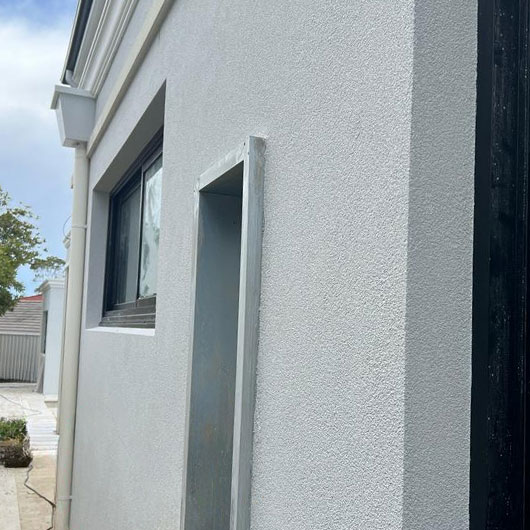
Wet Polymer Render & Dry Polymer Render
Wet Polymer Render: comes in 15 litre buckets and comes in a bucket just need to add cement.
Dry Polymer Render is in powder in bags and needs to be mixed with water and then ready to use.
Fence Columns - Architectural Pier
Two Types of Polymer Render
Dry Cement-Based Polymer Render: Supplied as a dry powder in bags, this is mixed with water on-site. It combines the strength of cement with polymer flexibility and is often used as a base coat or a durable finish.
Wet Acrylic Render: A wet-mix, resin-based plaster that is incredibly flexible and fast-drying. It is highly resistant to impact but slightly less breathable than silicone options.
Ideal Substrates for Polymer Render
Aerated Lightweight Concrete (ALC / Hebel):
Lightweight blocks and panels require a flexible, breathable coating that accommodates thermal movement without cracking.
Standard Masonry & Brickwork: Common clay bricks, engineering bricks, and concrete blocks bond perfectly, with the polymer formulation easily handling differences in wall suction.
Expanded Polystyrene (EPS) & Insulated Panels:
Essential for Exterior Insulation and Finish Systems
(EIFS), polymer render flexes over the foam panels and adheres without melting or damaging the insulation.
Fiber Cement Sheeting & Blueboard: These smooth, non-porous sheets expand and contract significantly; polymer render (combined with a fiberglass mesh) flexes with this movement to prevent joint cracking.
Existing Render: It can be applied directly over old, stable sand and cement or painted render to modernise the look, provided the original surface is not crumbling or hollow.
Smooth Concrete: Pre-cast or poured concrete walls that are too slick for traditional plaster bond securely with polymer-modified mixes.